
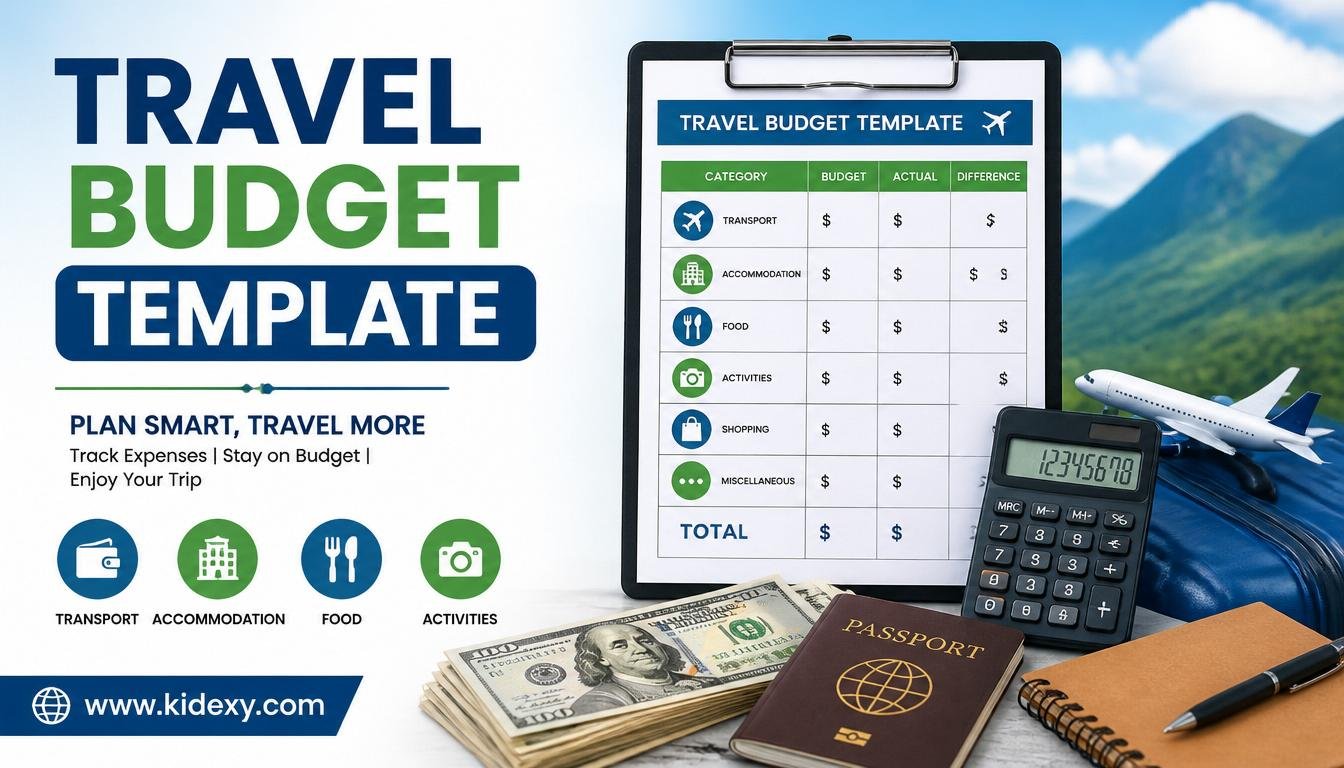
Planning a trip is exciting, but managing your money wisely is just as important as choosing the destination. Many travelers focus on flights, hotels, and activities without creating a financial plan, only to discover they have spent more than expected before the journey is over. A well-organized travel budget template can help prevent that situation by giving you a clear picture of your expected expenses before you leave home.
Whether you’re planning a weekend getaway, a family vacation, or an international adventure, having a structured budget makes decision-making easier. It allows you to set realistic spending limits, monitor costs throughout your trip, and prepare for unexpected expenses. This guide explains how to build an effective travel budget and what elements every planner should include for a stress-free travel experience.
Understanding a Travel Budget Template
What Is a Travel Budget Template?
A travel budget planner is a structured document that helps organize every expense associated with a trip. Instead of estimating costs mentally, you can record transportation, accommodation, meals, entertainment, shopping, and emergency expenses in one place. This organized approach provides a realistic overview of your expected spending before your journey begins.
Using a travel budget template also makes comparing different travel options much easier. You can estimate the total cost of multiple destinations, adjust your plans based on your available budget, and avoid financial surprises once your vacation starts. Whether you prefer a digital spreadsheet or a printable worksheet, the goal remains the same—keeping your finances under control.
Why Every Traveler Needs One
Even experienced travelers can underestimate how quickly expenses add up. Small purchases such as snacks, transportation fares, or attraction tickets may seem insignificant individually but can substantially increase your total travel costs over several days.
A detailed budget encourages smarter financial decisions from the beginning. It helps you prioritize essential expenses while identifying areas where you can save money. Instead of worrying about your remaining funds throughout the trip, you can focus on enjoying the experience with greater confidence.
Essential Sections Every Travel Budget Template Should Include
Transportation Costs
Transportation is often one of the largest travel expenses. Depending on your destination, this category may include airfare, train tickets, bus fares, rideshare services, rental cars, fuel, toll roads, and airport transfers.
It’s also important to account for local transportation after you arrive. Public transit, taxis, parking fees, and occasional rides can quickly add to your overall spending. Including every transportation cost creates a more accurate estimate before your departure.
Accommodation Expenses
Your lodging costs should cover more than just the advertised nightly rate. Hotels, vacation rentals, hostels, and resorts may include additional taxes, service charges, cleaning fees, or resort fees that affect your total budget.
Comparing accommodation options before booking allows you to balance comfort with affordability. Choosing a property that includes breakfast or offers kitchen facilities may also reduce your daily food expenses throughout the trip.
Food and Dining Budget
Food expenses vary greatly depending on your destination and travel style. Some travelers enjoy fine dining experiences, while others prefer local cafés, street food, or preparing simple meals themselves.
Creating a realistic meal budget prevents unnecessary overspending. Estimating costs for breakfast, lunch, dinner, beverages, and snacks helps you understand your expected daily spending and leaves room for occasional special meals without exceeding your budget.
Activities and Entertainment
Vacations are filled with memorable experiences, but attractions and activities often represent a significant portion of travel expenses. Museum tickets, guided tours, adventure sports, concerts, amusement parks, and cultural experiences should all be considered when planning.
Researching admission fees ahead of time makes budgeting much easier. Some destinations also offer city passes or combination tickets that provide discounts for multiple attractions, helping you enjoy more experiences while spending less.
Emergency and Miscellaneous Expenses
Unexpected situations can happen during any trip. Medical emergencies, delayed flights, lost luggage, or last-minute transportation changes may require additional spending that wasn’t originally planned.
Setting aside an emergency fund provides financial flexibility when surprises arise. You should also include miscellaneous expenses such as travel insurance, currency exchange fees, mobile data charges, laundry services, and small purchases that don’t fit into other categories.
How to Create a Travel Budget Template
Estimate Your Total Budget
Every successful travel plan starts with determining how much money you’re comfortable spending. Begin by identifying your overall budget before dividing it into categories such as transportation, accommodation, food, entertainment, and emergency savings.
When estimating your spending limit, consider both your financial situation and your travel priorities. Some travelers prefer spending more on luxury accommodations, while others choose budget-friendly lodging to enjoy additional activities. Defining these priorities early makes budgeting much more effective.
List Every Expected Expense
The next step is creating a comprehensive list of expected costs. Include every expense you can reasonably predict, from airfare and hotel bookings to meals, attraction tickets, souvenirs, local transportation, internet access, and travel insurance.
Using a travel budget template helps organize these expenses into clear categories, making it easier to estimate totals and identify areas where adjustments may be necessary. A detailed plan reduces the chances of forgetting important costs before your departure.
Track Spending During the Trip
Creating a budget is only the beginning. Recording your daily expenses allows you to compare planned costs with actual spending throughout your vacation. This habit helps you stay within your financial limits and avoid unnecessary overspending.
Many travelers use spreadsheets, mobile budgeting apps, or simple note-taking applications to update expenses as they occur. Regular tracking also makes it easier to adjust future spending if one category exceeds its original estimate.
Review and Adjust Your Budget
After returning home, reviewing your completed budget provides valuable insights for future travel planning. Compare estimated costs with actual expenses to identify where your predictions were accurate and where improvements can be made.
Each trip offers an opportunity to build a more reliable budgeting system. By refining your planning process after every vacation, you’ll create more accurate estimates, make smarter financial decisions, and enjoy greater peace of mind during future adventures.
Different Types of Travel Budget Planners
Personal Vacation Planner
A personal vacation planner is ideal for solo travelers who want complete control over their expenses. It focuses on individual spending, making it easier to allocate funds for transportation, accommodation, meals, sightseeing, and shopping without considering additional travelers.
This format is simple yet effective because it provides a clear overview of your financial plan. It also allows for quick adjustments if your itinerary changes during the trip.
Family Vacation Planner
Family trips involve more moving parts than solo travel. Parents often need to account for children’s meals, attraction tickets, larger accommodations, transportation for multiple people, and unexpected expenses that can arise while traveling together.
A family planner helps organize these costs in one place, making it easier to estimate the total vacation expense and avoid financial surprises.
Business Travel Planner
Business travelers usually need to separate personal and work-related expenses. Keeping accommodation, transportation, meals, conference fees, and client meetings organized makes reimbursement much easier.
Maintaining accurate records also simplifies expense reporting for employers and helps ensure every eligible cost is properly documented.
Road Trip Planner
Road trips require careful planning because expenses can change throughout the journey. Fuel costs, toll roads, parking fees, vehicle maintenance, overnight stays, and food should all be considered before departure.
Planning these expenses in advance allows travelers to enjoy the journey without constantly worrying about their remaining funds.
International Travel Planner
International vacations often involve additional financial considerations, including currency exchange, international transaction fees, visa costs, travel insurance, and higher transportation expenses.
Preparing for these extra costs helps travelers avoid unexpected charges while making international trips much less stressful.
Weekend Getaway Planner
Short trips usually involve fewer expenses, but budgeting is still valuable. Even a weekend escape can become expensive if meals, entertainment, and accommodation are not planned carefully.
A simple planner allows travelers to maximize their experience while staying within their intended spending limits.
Best Tools for Managing a Travel Budget
Spreadsheet Templates
Spreadsheets remain one of the most popular budgeting tools because they are flexible and easy to customize. Travelers can create categories, calculate totals automatically, and update expenses whenever necessary.
Cloud-based spreadsheets also allow access from multiple devices, making them convenient throughout the journey.
Printable Budget Planners
Some people prefer writing expenses by hand rather than using digital tools. Printable planners provide a straightforward way to record costs without relying on internet access or electronic devices.
They are particularly useful for travelers visiting remote destinations where connectivity may be limited.
Budget Tracking Apps
Modern budgeting apps automatically organize expenses and provide visual summaries of spending habits. Many include reminders, spending alerts, and category breakdowns that make financial management easier.
These applications are especially useful for travelers who prefer monitoring expenses in real time.
Digital Expense Trackers
Digital expense trackers help organize receipts, categorize purchases, and generate reports after the trip. Many support multiple currencies, making them valuable for international travel.
Having all expenses stored digitally also simplifies future planning and reimbursement processes.
Money-Saving Tips for Travelers
Book Transportation Early
Transportation prices often increase as travel dates approach. Booking flights, trains, or buses well in advance can result in significant savings and provide a wider selection of schedules.
Flexibility with departure dates can also reduce overall costs.
Choose Budget-Friendly Accommodation
Comfort does not always require expensive hotels. Vacation rentals, guesthouses, and hostels often provide excellent value while offering essential amenities.
Comparing locations, included services, and guest reviews helps identify the best option for your budget.
Plan Meals Wisely
Dining at restaurants for every meal can quickly increase vacation expenses. Mixing restaurant visits with grocery shopping or self-prepared meals helps reduce overall spending.
Trying local markets and smaller eateries often provides authentic experiences at lower prices.
Take Advantage of Free Attractions
Many destinations offer beautiful parks, museums with free admission days, walking tours, public beaches, and cultural events at little or no cost.
Researching these opportunities before your trip allows you to enjoy memorable experiences while keeping expenses under control.
Build an Emergency Fund
Unexpected situations can happen during any journey. Delayed transportation, medical needs, or lost belongings may require immediate spending.
Setting aside extra money provides peace of mind and prevents emergencies from disrupting your travel experience.
Common Travel Budget Mistakes to Avoid
Forgetting Hidden Costs
Travelers often focus on major expenses while overlooking taxes, service charges, baggage fees, parking, and gratuities.
Including these smaller costs creates a far more realistic financial plan.
Ignoring Currency Exchange Fees
International travelers sometimes forget that exchange rates and transaction fees affect their overall spending.
Checking current rates and choosing cost-effective payment methods can reduce unnecessary expenses.
Underestimating Daily Spending
Small purchases made throughout the day can accumulate faster than expected. Snacks, drinks, souvenirs, and transportation often exceed initial estimates.
Allowing a daily spending buffer helps absorb these additional costs without affecting the overall plan.
Not Tracking Expenses
Without recording purchases, it becomes difficult to know how much money remains available.
Reviewing expenses each day allows travelers to adjust their spending before reaching their financial limit.
Leaving No Emergency Cushion
Using the entire vacation budget without reserving extra funds increases financial risk if unexpected events occur.
Keeping a reserve ensures greater flexibility and reduces stress throughout the trip.
How to Customize Your Budget Planner
Add Personalized Expense Categories
Every traveler has different priorities. Some may spend more on adventure activities, while others focus on luxury dining or shopping.
Customizing expense categories creates a planning system that reflects individual travel styles.
Set Daily Spending Limits
Breaking the total budget into daily allowances makes managing money much easier.
Daily targets also help identify overspending before it becomes a larger financial issue.
Include Savings Goals
Planning begins long before departure. Setting savings goals helps travelers prepare financially without relying on credit or last-minute borrowing.
Regular contributions over time make even expensive vacations more affordable.
Track Multiple Travelers
Group trips benefit from organized expense sharing. Recording individual contributions and shared costs helps prevent confusion during and after the journey.
Clear records also make splitting expenses fair and straightforward.
Conclusion
Careful financial planning allows every journey to be more enjoyable and less stressful. Organizing expected expenses before departure provides greater confidence and helps travelers make informed decisions throughout the trip.
Whether you’re planning a weekend escape, a family holiday, or an international adventure, maintaining a clear spending plan encourages smarter choices and reduces the risk of unexpected financial surprises. With consistent planning and regular expense tracking, every trip becomes easier to manage and more rewarding.
Frequently Asked Questions
What expenses should be included in a travel budget?
Include transportation, accommodation, meals, attractions, shopping, insurance, local transportation, emergency funds, and miscellaneous expenses.
How much emergency money should I set aside?
A common recommendation is to reserve around 10–15% of your total planned spending for unexpected situations.
Is a spreadsheet better than a budgeting app?
Both work well. Spreadsheets offer greater customization, while budgeting apps provide convenient tracking and automatic calculations.
How often should I review my spending during a trip?
Checking your expenses at the end of each day helps you stay within your planned limits and adjust spending if necessary.
Can the same budget planner be used for different types of trips?
Yes. A flexible planner can be customized for solo vacations, family holidays, business travel, road trips, and international journeys by adjusting the expense categories.
you may also read

Welcome to Blogeenex! I’m Afaq Naqshbandi, an AI-Powered SEO, and Content Writer with 3 years of experience.
I help websites rank higher, grow traffic, and look amazing. My goal is to make SEO and web design simple and effective for everyone.
Let’s achieve more together!