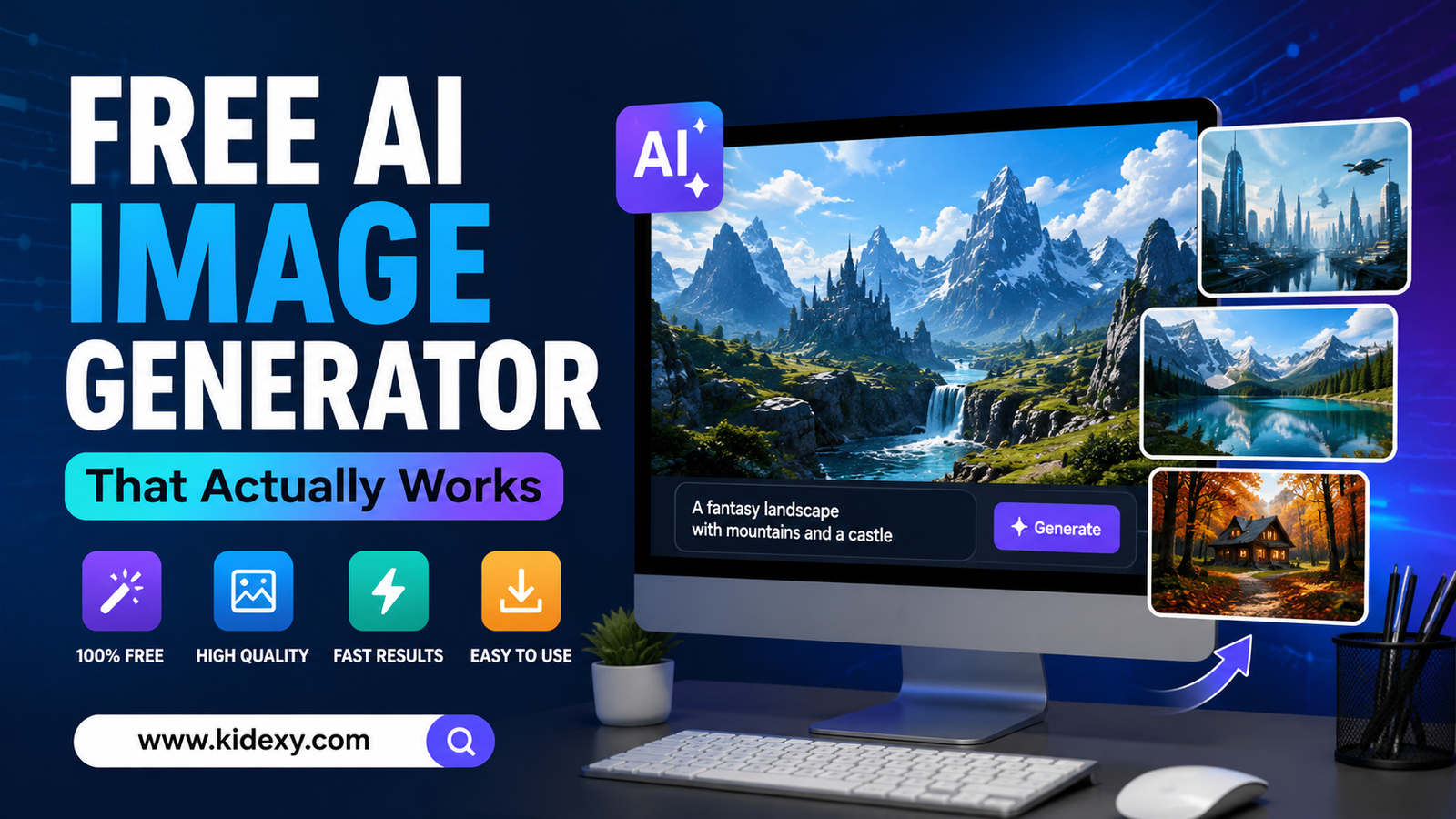
Creating eye-catching visuals once required expensive software, design skills, and hours of editing. Today, artificial intelligence has changed that completely. With the right tool, anyone can generate professional-looking images from a simple text description in seconds.
Whether you are a blogger, marketer, student, business owner, or social media creator, AI-generated visuals can help you produce content faster and more creatively. The challenge is finding a Free AI Image Generator that delivers quality results instead of blurry, generic images. This guide explains how these tools work, what features matter most, and how to choose one that truly meets your needs.
Understanding Free AI Image Generators
What Is an AI Image Generator?
An AI image generator is a tool that creates images based on text prompts or existing images. Instead of drawing manually, users simply describe what they want, such as “a modern office at sunset” or “a watercolor painting of mountains,” and the AI produces a visual interpretation.
These tools rely on advanced machine learning models trained on large collections of images. The AI learns patterns, styles, colors, and compositions, allowing it to generate entirely new visuals that match the user’s request.
How AI Image Generation Works
When you enter a prompt, the AI analyzes the words and predicts what the image should look like. It then generates an image step by step, refining details such as lighting, textures, and composition.
Modern AI systems can create realistic photos, digital art, illustrations, logos, product concepts, and even fantasy scenes. The quality varies by platform, which is why choosing the right tool is important.
Common Uses for AI-Generated Images
AI-generated visuals are now used across many industries. Bloggers create featured images, marketers design ad graphics, teachers make educational visuals, and entrepreneurs produce product mockups.
Social media creators also rely on AI tools to maintain a consistent posting schedule without hiring a designer for every piece of content.
Why People Choose a Free AI Image Generator
Save Time on Creative Projects
Traditional design work can take hours or even days. AI tools can generate multiple concepts within minutes, making them ideal for fast-moving projects.
This speed is especially valuable for content creators who need fresh visuals regularly.
Reduce Design Costs
Hiring designers or purchasing premium stock images can become expensive. A Free AI Image Generator offers a budget-friendly alternative for individuals and small businesses.
Many platforms provide free credits, basic generation features, or limited daily usage that is sufficient for casual projects.
Create Images Without Professional Skills
One of the biggest advantages of AI is accessibility. You do not need to understand Photoshop, illustration, or graphic design principles to create attractive visuals.
A clear prompt is often enough to produce surprisingly impressive results.
Generate Unique Visual Content Quickly
Stock photos are widely used and can make content feel repetitive. AI-generated images are often unique, helping brands and creators stand out.
This originality is particularly useful for blogs, presentations, and social media campaigns.
Key Features to Look for Before Choosing a Tool
Image Quality and Realism
The first thing to evaluate is output quality. Good AI tools produce sharp images with accurate details, natural lighting, and realistic textures.
If the generated images consistently look distorted or low-resolution, the tool may not be worth your time.
Text-to-Image Accuracy
A strong AI model should understand prompts well. If you ask for “a red sports car on a rainy city street,” the generated image should closely match that description.
Prompt accuracy is one of the biggest differences between average and excellent AI image generators.
Editing and Customization Options
Some platforms allow you to modify generated images, change styles, remove objects, or expand backgrounds. These features can significantly improve workflow.
Even basic editing tools can help refine an image without switching to another application.
Speed and Ease of Use
A clean interface matters. The best tools make it easy to enter prompts, generate images, and download results.
Fast generation times also improve productivity, especially when testing multiple ideas.
Commercial Usage Rights
Before using AI-generated images for business, check the platform’s licensing terms. Some tools allow commercial use, while others have restrictions.
Understanding these rules helps avoid future legal or copyright concerns.
Privacy and Data Protection
If you upload personal photos or business assets, review the platform’s privacy policy. Reputable services are transparent about how user data is stored and used.
This is particularly important for companies handling sensitive content.
Different Types of AI Image Generators
Text-to-Image Tools
These are the most popular AI generators. Users describe an image in words, and the AI creates it from scratch.
They are ideal for blog graphics, concept art, social media posts, and marketing visuals.
Image-to-Image Generators
These tools transform an existing image into a new style or variation. For example, a photo can be turned into a watercolor painting or a futuristic illustration.
They are useful for creative experimentation and brand design.
AI Art Generators
AI art platforms focus on artistic styles such as anime, oil painting, fantasy art, and abstract compositions.
Creators often use them for posters, wallpapers, and digital artwork.
AI Photo Editors
Some AI tools specialize in enhancing photos rather than creating them from scratch. They can remove backgrounds, improve quality, and retouch images automatically.
These features are popular among e-commerce sellers and photographers.
Logo and Graphic Design Generators
Certain platforms are designed specifically for branding. They help generate logos, icons, banners, and other business graphics.
For startups and freelancers, these tools can provide a quick starting point for visual identity design.
Best Ways to Use a Free AI Image Generator
Social Media Content
AI-generated visuals can make social posts more engaging and help maintain a consistent publishing schedule.
Many creators use AI to produce quote graphics, promotional images, and themed content.
Blog and Website Graphics
Custom visuals can improve user engagement and make articles more memorable. Instead of relying solely on stock photos, writers can create images tailored to their topics.
A Free AI Image Generator can be especially helpful for niche subjects where suitable stock images are difficult to find.
Marketing Materials
Businesses use AI-generated images for ads, email campaigns, landing pages, and promotional banners.
Quick generation allows teams to test multiple creative ideas without large design costs.
Business Presentations
Presentations become more visually appealing when they include custom illustrations and concepts.
AI tools can create diagrams, backgrounds, and thematic visuals that support key messages.
Part 1 complete. This section covers the introduction through practical use cases while keeping the keyword usage natural and within your requested limit.
Tips for Getting Better AI-Generated Images
Use Detailed Descriptions
The quality of an AI-generated image often depends on the quality of the prompt. Instead of writing a short description like “mountain landscape,” include details about lighting, colors, mood, weather, perspective, and artistic style. The more context you provide, the more accurately the AI can interpret your vision.
Think of prompts as creative instructions rather than simple keywords. A well-written prompt helps the AI understand exactly what you expect, leading to more polished and visually appealing results.
Refine Images Through Multiple Generations
Rarely does the first generated image become the final version. Most creators generate several variations before selecting the one that best matches their expectations.
Experiment with different wording, styles, and camera angles. Even small prompt adjustments can produce dramatically different results, making it easier to find the perfect image for your project.
Combine AI with Manual Editing
While AI can create impressive visuals, a small amount of manual editing can make them even better. Adjusting brightness, contrast, cropping, or adding text can transform a good image into a professional-quality design.
Many creators combine AI-generated graphics with lightweight editing software to create unique branding materials, website banners, and marketing assets.
Keep Up with New AI Features
Artificial intelligence evolves rapidly. New image models, editing capabilities, and creative features are introduced regularly, often improving image quality and prompt understanding.
Exploring updates and experimenting with new tools allows you to stay ahead of design trends while producing more engaging visual content.
Common Mistakes to Avoid
Using Vague Prompts
A common mistake is expecting excellent results from very short or unclear prompts. General descriptions often produce generic images that lack personality and detail.
Instead, include specific elements such as colors, environment, artistic style, lighting, and composition to guide the AI toward better outputs.
Ignoring Licensing Terms
Every platform has its own usage policy. Some allow commercial use, while others restrict how generated images can be distributed or sold.
Reading the licensing information before publishing images helps prevent copyright or legal issues later.
Overlooking Image Quality
Always inspect the generated image before using it. Occasionally, AI models create distorted hands, unrealistic faces, or inconsistent backgrounds.
Zoom in and review fine details carefully. If something looks incorrect, generate another variation or edit the image before publishing.
Expecting Perfect Results Immediately
Artificial intelligence is a creative assistant rather than a mind reader. Producing an outstanding image often requires testing several prompts and refining the output.
Treat the process as collaboration with the AI instead of expecting flawless results on the first attempt.
How to Choose the Right Free AI Image Generator
Match the Tool to Your Goals
Every AI platform has its strengths. Some focus on realistic photography, while others specialize in artistic illustrations, marketing graphics, or concept art.
Choosing a tool based on your primary purpose will provide better results than selecting one simply because it is popular.
Compare Features Instead of Hype
Marketing claims can be misleading. Compare practical features such as image quality, generation speed, editing tools, export options, and prompt accuracy.
Testing several platforms yourself is often the best way to discover which one fits your workflow.
Consider Ease of Use and Output Quality
An intuitive interface saves time and makes the creative process more enjoyable. Beginners usually benefit from simple dashboards, while experienced users may prefer advanced customization options.
A reliable Free AI Image Generator should balance ease of use with consistently high-quality image generation.
Think About Long-Term Creative Needs
As your projects grow, your design requirements may also change. Selecting a platform with room to expand, whether through premium features or advanced editing tools, can save time in the future.
Building familiarity with one dependable platform also improves efficiency over time.
Conclusion
Artificial intelligence has made professional-quality image creation accessible to almost everyone. Whether you are producing visuals for a website, social media campaign, online store, or educational project, AI can dramatically reduce the time and effort required while expanding your creative possibilities.
The best Free AI Image Generator is the one that aligns with your goals, produces consistent results, and offers an enjoyable user experience. Explore different platforms, experiment with detailed prompts, and refine your workflow as you gain experience. With practice, AI can become one of the most valuable tools in your creative toolkit.
Frequently Asked Questions
What is the best free AI image generator?
The best choice depends on your needs. Some platforms focus on realistic images, while others specialize in illustrations, artwork, or marketing graphics. Testing several options is the easiest way to find the right fit.
Can I use AI-generated images for commercial projects?
Many platforms allow commercial use, but licensing policies vary. Always review the platform’s terms before using generated images in products, advertisements, or client work.
Do I need design experience to use AI image generators?
No. Most modern AI tools are designed for beginners. Writing a clear prompt is usually enough to create high-quality visuals without advanced graphic design skills.
How can I improve my AI image prompts?
Use descriptive language that includes subjects, colors, lighting, artistic style, background, and camera perspective. Specific prompts generally produce better and more accurate images.
Are free AI image generators suitable for professional work?
Yes. Many free tools generate high-quality images suitable for blogs, presentations, social media, and marketing materials. For advanced editing or larger commercial projects, premium features may provide additional flexibility.
you may also read
Welcome to Blogeenex! I’m Afaq Naqshbandi, an AI-Powered SEO, and Content Writer with 3 years of experience.
I help websites rank higher, grow traffic, and look amazing. My goal is to make SEO and web design simple and effective for everyone.
Let’s achieve more together!