
Introduction
Education is changing rapidly, and technology is playing a bigger role than ever before. Students today have access to digital resources that can help them learn faster, stay organized, and complete academic tasks more efficiently. Among these innovations, artificial intelligence has become one of the most influential developments in modern learning.
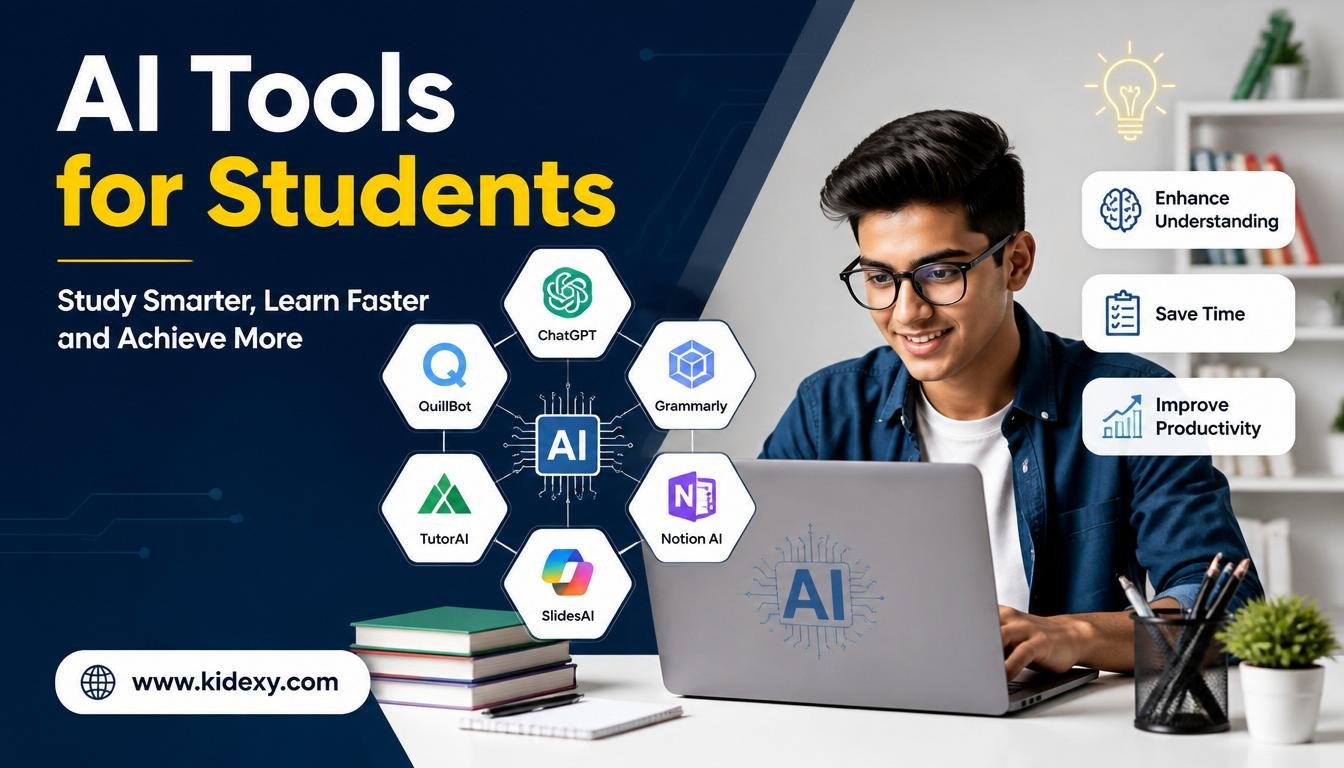
From writing assistance to research support and study planning, AI Tools for Students are transforming the way learners approach their education. Instead of spending hours searching for information or organizing notes manually, students can now use intelligent platforms to simplify complex tasks and focus more on understanding concepts.
The growing popularity of AI-powered learning solutions is not just a trend. These tools are helping students manage their workload, improve productivity, and develop stronger study habits. When used responsibly, they can become valuable companions throughout the academic journey.
This guide explores how artificial intelligence is reshaping education, the benefits it offers, and the different types of tools available to help students succeed.
Understanding AI Tools for Students
What Are AI Tools?
Artificial intelligence tools are software applications designed to perform tasks that normally require human intelligence. They can analyze information, recognize patterns, generate content, answer questions, and provide personalized recommendations based on user needs.
In an educational setting, these tools help learners with activities such as writing essays, summarizing notes, conducting research, creating presentations, and organizing study schedules. Many platforms use machine learning technology to improve their responses over time, making them increasingly useful for academic purposes.
Unlike traditional software, AI-powered applications can adapt to individual learning styles. This ability allows students to receive more personalized support while working on assignments or preparing for exams.
Why Students Use AI Today
Modern education often requires students to manage multiple responsibilities at the same time. Coursework, projects, presentations, and examinations can create significant pressure. AI solutions help reduce this burden by automating repetitive tasks and streamlining workflows.
Many students also appreciate the convenience of receiving instant assistance. Instead of waiting for office hours or searching through numerous resources, they can quickly access explanations, summaries, or writing suggestions whenever needed.
Another reason for the growing adoption of these technologies is accessibility. Many tools are available online and can be used from virtually any device, making learning more flexible and convenient.
Benefits of Using AI in Education
Enhancing Study Efficiency
One of the biggest advantages of artificial intelligence in education is improved efficiency. Students can quickly gather information, summarize lengthy materials, and organize their learning resources without spending unnecessary time on repetitive tasks.
This increased efficiency allows learners to dedicate more attention to understanding concepts and applying knowledge rather than simply collecting information. As a result, study sessions often become more productive and focused.
Time management also improves significantly. Smart planning tools can help students create schedules, set reminders, and prioritize tasks based on deadlines and workload.
Improving Writing and Research
Academic writing requires clarity, accuracy, and strong organization. AI-powered writing assistants help students refine grammar, improve sentence structure, and enhance readability. These features can be especially useful when working on essays, reports, and research papers.
Research has also become more manageable. Intelligent search tools can identify relevant sources, summarize findings, and highlight key information. This allows students to spend less time searching and more time analyzing and understanding content.
When combined with critical thinking and proper fact-checking, these capabilities can significantly improve academic performance.
Supporting Personalized Learning
Every student learns differently. Some prefer visual explanations, while others benefit from detailed written guidance. Artificial intelligence can adapt to these preferences and provide customized learning experiences.
Personalized learning helps students progress at a comfortable pace. Instead of following a one-size-fits-all approach, learners can focus on areas where they need the most improvement.
This flexibility often leads to greater confidence and stronger engagement with educational materials.
Categories of AI Tools Students Should Know
AI Writing Assistants
Writing assistants are among the most widely used educational technologies. These platforms help students improve grammar, spelling, punctuation, and overall writing quality.
They can also provide suggestions for sentence structure and clarity, making academic work easier to understand and more professional. While these tools are helpful, students should always review recommendations carefully to ensure accuracy and maintain their own voice.
Writing assistants are particularly valuable for essays, assignments, reports, and scholarship applications.
AI Research Tools
Research platforms powered by artificial intelligence help students locate relevant information more efficiently. Instead of reviewing countless pages of search results, learners can receive concise summaries and direct answers to specific questions.
Many research tools also assist with citation generation and source discovery. This can save time while encouraging students to use credible references in their academic work.
These platforms are especially beneficial for university students working on complex projects and research papers.
AI Note-Taking and Summarization Tools
Taking effective notes is essential for learning, but reviewing large amounts of information can be challenging. AI-powered note-taking solutions simplify this process by organizing content and generating concise summaries.
Students can quickly identify key concepts, important definitions, and major takeaways from lectures or study materials. This makes revision sessions more efficient and less overwhelming.
Summarization features are particularly useful when preparing for exams or reviewing lengthy textbooks.
AI Tutoring and Learning Platforms
Virtual tutoring platforms provide personalized support across various subjects. They can explain concepts, answer questions, and guide students through problem-solving processes.
Unlike static educational resources, these systems offer interactive learning experiences that encourage engagement and understanding. Students can often receive assistance whenever they need it, regardless of location or schedule.
These learning platforms are becoming increasingly popular because they provide accessible educational support without the limitations of traditional tutoring arrangements.
AI Presentation and Project Tools
Creating presentations often requires significant time and effort. Intelligent design tools can help students generate outlines, structure content, and create visually appealing slides.
These applications simplify project preparation by reducing the amount of manual formatting required. Students can focus more on the quality of their ideas rather than spending excessive time on design details.
For group assignments and classroom presentations, these tools can improve efficiency and collaboration.
Key Features to Look for in Student AI Tools
Ease of Use
A good educational tool should be simple and intuitive. Complicated interfaces can create frustration and reduce productivity. Students benefit most from platforms that offer clear navigation and straightforward functionality.
Ease of use becomes particularly important when managing multiple academic responsibilities. Simple tools help learners accomplish tasks quickly without spending extra time learning how the software works.
Accuracy and Reliability
The quality of information provided by an AI platform is critical. Students should choose tools that prioritize accuracy and provide trustworthy results.
Even the most advanced systems can occasionally produce incorrect information. For this reason, users should verify important facts and consult credible sources whenever necessary.
Reliable tools support learning, while inaccurate information can create confusion and lead to mistakes.
Collaboration Capabilities
Many academic projects involve teamwork. Collaboration features allow students to share notes, edit documents, and communicate effectively within group assignments.
Platforms that support real-time collaboration can improve productivity and make project management easier. These features are particularly valuable in higher education environments where group work is common.
Cost and Accessibility
Budget considerations often influence which tools students choose. Fortunately, many platforms offer free versions that provide useful features for everyday academic tasks.
Accessibility is equally important. Students should look for tools that work across multiple devices and operating systems. This flexibility ensures that learning resources remain available whenever they are needed.
Privacy and Data Security
Educational platforms often handle personal information and academic content. Students should pay attention to privacy policies and security measures before using any service.
Choosing secure tools helps protect sensitive information and reduces potential risks associated with data sharing. Understanding how a platform stores and uses information is an important part of responsible technology use.
How AI Tools Can Improve Different Academic Tasks
Completing Assignments More Effectively
Assignments often require research, planning, writing, and revision. Managing all these stages can be challenging, especially when deadlines are close. Modern educational technology helps students organize their work and complete tasks more efficiently.
By assisting with brainstorming, outlining, and editing, these tools allow learners to focus on developing strong ideas and clear arguments. Rather than replacing effort, they support the learning process and help students produce higher-quality work.
Preparing for Exams and Quizzes
Exam preparation becomes easier when students can quickly review key concepts and identify important topics. Intelligent study platforms can create summaries, flashcards, and practice questions that make revision more engaging.
Many students struggle with knowing where to begin when preparing for tests. Smart learning systems help structure study sessions and highlight areas that need additional attention. This targeted approach often leads to better retention and greater confidence before exams.
Managing Research Projects
Research projects require gathering information from multiple sources and organizing large amounts of data. This process can become overwhelming without a clear strategy.
Artificial intelligence can help students sort information, identify relevant sources, and create concise summaries of complex materials. These capabilities allow learners to spend more time analyzing information and developing insights rather than searching endlessly for resources.
Organizing Daily Study Schedules
Successful students often rely on strong time-management skills. Balancing coursework, extracurricular activities, and personal responsibilities requires careful planning.
Digital productivity tools can assist with scheduling tasks, setting reminders, and tracking progress. By maintaining a structured study routine, students are more likely to stay organized and meet academic deadlines consistently.
Enhancing Group Work and Collaboration
Collaboration is an important part of modern education. Group assignments encourage teamwork, communication, and problem-solving skills.
Technology-powered collaboration platforms make it easier for students to share files, exchange ideas, and coordinate tasks. These features help teams remain productive even when members are working from different locations.
Common Mistakes Students Make When Using AI
Overreliance on AI-Generated Content
One of the biggest risks is becoming too dependent on automated assistance. While technology can provide valuable support, students should continue developing their own critical thinking and writing skills.
Submitting content without understanding it can limit learning and reduce long-term academic growth. The most effective approach is to use AI as a guide rather than a substitute for genuine effort.
Ignoring Fact-Checking and Verification
Not every response generated by technology is accurate. Sometimes information may be outdated, incomplete, or incorrect.
Students should always verify important facts using trusted sources. Developing strong research habits remains essential regardless of how advanced educational tools become.
Misunderstanding Academic Integrity Policies
Schools and universities often have specific guidelines regarding technology use. Some institutions allow certain forms of assistance, while others have stricter policies.
Understanding these expectations helps students avoid unintentional violations. Responsible use ensures that technology enhances learning without compromising academic integrity.
Using Too Many Tools at Once
With so many options available, students sometimes try multiple platforms simultaneously. This can create confusion and reduce productivity.
Instead of relying on numerous applications, it is often more effective to choose a few reliable tools that meet specific academic needs. A focused approach helps maintain consistency and efficiency.
Responsible and Ethical Use of AI in Education
Understanding School and University Guidelines
Educational institutions continue to develop policies regarding artificial intelligence. Students should familiarize themselves with these guidelines before using technology for coursework or assessments.
Following institutional policies demonstrates professionalism and helps maintain fairness within academic environments. Responsible behavior also encourages trust between students and educators.
Avoiding Plagiarism
Original work remains an essential part of education. Students should ensure that assignments reflect their own understanding and analysis rather than simply copying generated content.
Proper citation practices and careful revision help maintain academic honesty. Technology should support learning rather than replace personal effort and creativity.
Using AI as a Learning Assistant Rather Than a Shortcut
The greatest value of educational technology comes from its ability to support learning. Students benefit most when they use it to explore ideas, clarify concepts, and strengthen skills.
Viewing these tools as educational assistants encourages active engagement and deeper understanding. This mindset helps learners gain knowledge while still benefiting from technological support.
Building Critical Thinking Skills Alongside AI
Critical thinking remains one of the most important academic and professional skills. Students should evaluate information carefully, question assumptions, and analyze evidence independently.
Technology can provide information quickly, but meaningful learning still requires thoughtful interpretation. Combining analytical skills with modern tools creates a stronger and more effective learning experience.
Choosing the Right AI Tool for Your Needs
For Writing and Editing
Students who frequently write essays, reports, or research papers should prioritize tools that improve grammar, readability, and organization. These features can help polish written work while maintaining clarity and professionalism.
The best solutions support revision and learning rather than simply making automatic changes. This approach helps students improve their writing abilities over time.
For Research and Citations
Research-focused platforms are valuable for locating credible information and organizing references. Students working on academic projects should seek tools that simplify source discovery and citation management.
Reliable research assistance can reduce workload while improving the quality of academic work.
For Note-Taking and Organization
Students who manage large amounts of information benefit from tools that organize notes, summarize content, and create study materials.
Strong organizational systems make it easier to review information and stay prepared throughout the academic year.
For Presentations and Projects
Presentation tools can save time while helping students create visually appealing materials. These platforms are particularly useful for class projects and group assignments.
By simplifying design tasks, they allow students to focus on communicating ideas effectively.
For General Study Support
Some learners prefer all-in-one platforms that combine multiple educational features. These solutions can support research, writing, organization, and study planning within a single environment.
Choosing the right option ultimately depends on individual goals, learning styles, and academic requirements.
The Future of AI in Student Learning
Emerging Trends in Educational Technology
The educational landscape continues to evolve as new technologies emerge. Future innovations are expected to provide even more personalized and interactive learning experiences.
Adaptive learning systems, intelligent tutoring platforms, and advanced content generation tools will likely become increasingly common in classrooms and online learning environments.
The Growing Importance of AI Literacy
Understanding how artificial intelligence works is becoming an essential skill. Students who learn to use these technologies effectively will be better prepared for future academic and professional opportunities.
AI literacy includes knowing how to evaluate information, use tools responsibly, and understand their limitations.
Skills Students Will Need in an AI-Driven World
While technology continues to advance, human skills remain incredibly valuable. Creativity, communication, problem-solving, and critical thinking will continue to play central roles in education and employment.
Students who combine these abilities with a strong understanding of modern technology will be well positioned for future success.
Conclusion
Technology has transformed education in remarkable ways, giving learners access to resources that were once unimaginable. When used thoughtfully, AI Tools for Students can support writing, research, organization, exam preparation, and overall academic productivity.
The key to success lies in using these tools responsibly. They should enhance learning rather than replace it. Students who balance technological assistance with independent thinking are more likely to develop lasting knowledge and valuable skills.
As educational technology continues to evolve, learners who embrace innovation while maintaining academic integrity will be better equipped to thrive in both their studies and future careers.
Frequently Asked Questions
What are the best AI tools for students?
The best options depend on individual needs. Some tools focus on writing assistance, while others specialize in research, note-taking, tutoring, or presentation creation.
Are AI tools allowed in schools and universities?
Policies vary between institutions. Students should review their school’s guidelines and ensure they use technology in a way that aligns with academic requirements.
Can AI help improve academic performance?
Yes, when used responsibly. These tools can support organization, research, writing, and study planning, helping students work more efficiently and effectively.
Are free AI tools sufficient for most students?
Many free platforms provide enough features for everyday academic tasks. Premium versions may offer additional capabilities, but free options are often suitable for general use.
How can students use AI ethically?
Students should use technology to support learning, verify information carefully, avoid plagiarism, and follow their institution’s academic integrity policies.
you may also read

Welcome to Blogeenex! I’m Afaq Naqshbandi, an AI-Powered SEO, and Content Writer with 3 years of experience.
I help websites rank higher, grow traffic, and look amazing. My goal is to make SEO and web design simple and effective for everyone.
Let’s achieve more together!
1 thought on “AI Tools for Students That Matter: A Complete Guide to Smarter Learning”